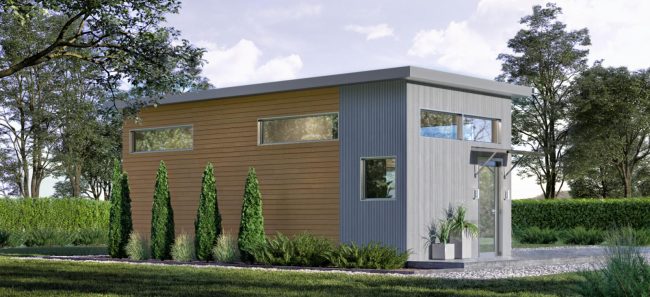
Advantages and Disadvantages of Prefabricated Homes
Prefabricated homes, also known as prefabricated buildings or modular homes, are constructed in sections at a factory and then transported to the building site for assembly. This method of construction has gained popularity in recent years due to its many benefits. However, like any other building method, it also has its drawbacks.
Advantages of Prefabricated Homes
- Faster Construction: One of the primary advantages of prefabricated homes is their faster construction time. Since the modules are built off-site, the overall construction period is significantly reduced compared to traditional construction methods.
- Cost-Effective: Prefabricated homes can often be more cost-effective due to efficient manufacturing processes and reduced labor costs. Additionally, the use of standardized components can lead to economies of scale.
- Quality Control: Factory-controlled environments allow for better quality control and precision in the manufacturing process. This can result in a more consistent and higher-quality finished product.
- Customization: Despite being prefabricated, modular homes offer a surprising degree of customization. Various floor plans, exterior finishes, and interior designs can be combined to create a unique home.
- Energy Efficiency: Prefabricated homes can be designed to be highly energy-efficient. Manufacturers can incorporate advanced insulation materials and energy-efficient systems to reduce energy consumption.
- Sustainability: Prefabricated homes often use sustainable materials and construction methods, minimizing their environmental impact.
Disadvantages of Prefabricated Homes
- Limited Design Flexibility: While there is a degree of customization, the design options for prefabricated homes may be more limited compared to custom-built homes. The modular nature of the construction can constrain certain architectural features.
- Transportation Costs: Transporting the prefabricated modules to the building site can add to the overall cost, especially for long-distance projects.
- Site Constraints: The assembly of prefabricated homes can be affected by site conditions such as terrain, access, and existing infrastructure.
- Perception: Some people may have preconceived notions about the quality and appearance of prefabricated homes, which can be a barrier to their adoption.
- Refinancing: Obtaining financing for a prefabricated home can sometimes be more challenging compared to traditional homes, as lenders may have specific requirements for modular construction.
In conclusion, prefabricated homes offer a number of advantages, including faster construction, cost-effectiveness, and energy efficiency. However, they also have some limitations, such as limited design flexibility and potential transportation challenges. The suitability of a prefabricated home will depend on individual needs and preferences, as well as local regulations and building codes.
Advantages and Disadvantages of Prefabricated Homes